

What Is a Standard TFT Module and How to Choose the Best TFT LCD Display Module for Your Project
In today’s fast-evolving electronics industry, selecting the right Standard TFT Module is critical for ensuring optimal performance, durability, and cost-efficiency in embedded systems and industrial applications. This comprehensive guide explores what a standard TFT module is, how it differs from custom displays, its technical specifications, interface types, brightness levels, touch technologies, and industry applications.
Whether you are developing medical equipment, smart home devices, industrial control panels, or consumer electronics, understanding the fundamentals of TFT LCD display modules will help you make informed procurement decisions.
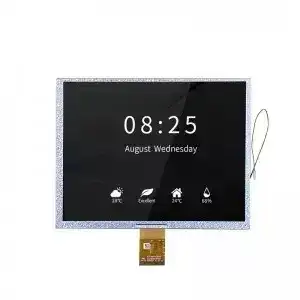
Table of Contents
- 1. What Is a Standard TFT Module?
- 2. Core Technical Specifications Explained
- 3. Types of Standard TFT Display Modules
- 4. Interface Options and Compatibility
- 5. Touch Technologies: Capacitive vs Resistive
- 6. Applications Across Industries
- 7. How to Choose the Best Standard TFT LCD Module
- 8. Standard vs Custom TFT Modules
- 9. Quality Assurance and Reliability Considerations
- 10. FAQ – Standard TFT Modules
1. What Is a Standard TFT Module?
A Standard TFT Module refers to a pre-engineered Thin-Film Transistor (TFT) LCD display module manufactured in fixed sizes, resolutions, and interface configurations. Unlike custom-designed displays, standard modules are mass-produced and optimized for broad industrial and commercial applications.
These modules typically include:
- TFT LCD panel
- Driver IC
- Backlight system (LED-based)
- FPC (Flexible Printed Circuit)
- Optional touch panel (capacitive or resistive)
Because of their standardized structure, they offer:
- Stable supply chain availability
- Lower development cost
- Shorter lead times
- High reliability
Manufacturers such as Victronix provide a wide range of industrial-grade standard TFT LCD display modules designed for embedded system integration.
2. Core Technical Specifications Explained
Understanding key specifications is essential before selecting a TFT LCD module.
| Specification | Description | Typical Range |
|---|---|---|
| Display Size | Diagonal measurement of screen | 1.44” – 15.6” |
| Resolution | Number of pixels (W × H) | 128x128 to 1920x1080 |
| Brightness | Luminance level (cd/m²) | 250 – 1500 nits |
| Viewing Angle | Visible angle without color distortion | TN: 60°–70°, IPS: 170°–178° |
| Operating Temperature | Environmental tolerance | -20°C to +70°C (industrial) |
| Interface | Communication protocol | SPI, RGB, LVDS, MIPI |
High-brightness TFT modules are ideal for outdoor or sunlight-readable applications. IPS TFT modules provide superior viewing angles compared to TN panels.
3. Types of Standard TFT Display Modules
3.1 TN (Twisted Nematic) TFT Modules
- Cost-effective
- Faster response time
- Limited viewing angle
3.2 IPS (In-Plane Switching) TFT Modules
- Wide viewing angles (up to 178°)
- Superior color accuracy
- Ideal for medical and industrial UI
3.3 High Brightness TFT Modules
- 800–1500 nits brightness
- Outdoor readability
- Automotive dashboards, kiosks
3.4 Touch-Integrated TFT Modules
- Capacitive touch (multi-touch support)
- Resistive touch (glove-compatible)
4. Interface Options and Compatibility
Selecting the correct interface ensures seamless integration with your MCU or processor.
- SPI: Suitable for small displays and low pin count systems
- RGB: Common for mid-size displays requiring real-time refresh
- LVDS: High-resolution industrial panels
- MIPI DSI: High-speed communication for advanced processors
Always confirm voltage levels (3.3V / 5V), timing parameters, and driver IC compatibility.
5. Touch Technologies: Capacitive vs Resistive
| Feature | Capacitive Touch | Resistive Touch |
|---|---|---|
| Multi-touch | Yes | No |
| Durability | High | Moderate |
| Glove Support | Limited (unless tuned) | Yes |
| Clarity | Excellent | Good |
Industrial equipment often uses resistive touch due to environmental tolerance, while smart devices prefer capacitive touch for user experience.
6. Applications Across Industries
Standard TFT LCD modules are widely used in:
- Industrial control panels
- Medical diagnostic equipment
- Smart home systems
- POS terminals
- Automotive instrumentation
- Handheld testing devices
For example, industrial HMI systems require wide temperature range and high brightness, while consumer electronics focus more on slim structure and vivid color rendering.
7. How to Choose the Best Standard TFT LCD Module
Follow these engineering steps:
Step 1: Define Application Requirements
- Indoor or outdoor?
- Touch required?
- Operating temperature?
Step 2: Select Proper Size & Resolution
Choose resolution based on UI complexity and processing capability.
Step 3: Evaluate Brightness & Viewing Angle
Outdoor applications typically require 800+ nits brightness.
Step 4: Confirm Interface Compatibility
Match with MCU or SoC interface support.
Step 5: Review Supplier Capability
- Long-term availability
- Technical support
- Quality certifications (ISO, RoHS)
8. Standard vs Custom TFT Modules
| Feature | Standard TFT Module | Custom TFT Module |
|---|---|---|
| Cost | Lower | Higher |
| Lead Time | Short | Long |
| Design Flexibility | Limited | High |
| MOQ | Low | High |
If your application aligns with common sizes (e.g., 2.4”, 3.5”, 5.0”, 7.0”), standard TFT modules are typically the most efficient solution.
9. Quality Assurance and Reliability Considerations
High-quality TFT display modules undergo:
- 100% functional testing
- Backlight aging tests
- Vibration testing
- ESD protection validation
- Optical inspection
When sourcing from professional manufacturers like Victronix, ensure documentation includes:
- Datasheet with electrical characteristics
- Mechanical drawings
- Driver IC specifications
- Compliance certifications
10. FAQ – Standard TFT Modules
Q1: What is the lifespan of a standard TFT LCD module?
Typical LED backlight lifespan ranges from 30,000 to 50,000 hours depending on brightness usage.
Q2: Can I use a standard TFT module outdoors?
Yes, but choose high-brightness versions (800–1500 nits) with anti-glare surface treatment.
Q3: What is the difference between IPS and TN TFT modules?
IPS offers wider viewing angles and better color reproduction, while TN is more cost-effective.
Q4: Are standard TFT modules customizable?
While core panel specifications remain fixed, customization may include touch panel addition, cover lens design, and FPC adjustments.
Q5: How do I ensure long-term supply stability?
Partner with experienced manufacturers who maintain long product lifecycles and stable supply chains.
Conclusion
Choosing the right Standard TFT Module is a strategic decision that directly impacts product performance, user experience, and lifecycle cost. By carefully evaluating display size, resolution, brightness, interface compatibility, and touch technology, engineers can ensure optimal integration.
If you are looking for reliable, industrial-grade standard TFT LCD display modules with stable supply and technical support, Victronix provides comprehensive solutions tailored to diverse industry needs.
Ready to upgrade your display solution? Contact us today to discuss your project requirements and discover the ideal Standard TFT Module for your application.