
Thin mechanical stack
Module thickness, bezel width, FPC bend area and connector position are matched to compact housings.


AMOLED, TFT LCD and touch solutions for smartwatches, fitness trackers, sports equipment and portable wellness products—engineered for thin structures, low power and daily interaction.
Screen shape, battery capacity, enclosure thickness, interface bandwidth and the intended user interaction are reviewed together before a module is selected.
Module thickness, bezel width, FPC bend area and connector position are matched to compact housings.
Display technology, brightness, refresh behavior and interface are balanced against the target operating time.
Brightness, contrast, cover-lens reflection and UI content are reviewed for workouts in changing light.
Touch tuning, AF cover glass, bonding and the front structure are configured for frequent use and cleaning.
Wearable products place different priorities on appearance, outdoor use, operating time and target cost. We compare these requirements before recommending a display technology and module.
Self-emissive pixels provide deep black, high contrast and a thin structure for premium smartwatches and fitness trackers.
Ambient light helps improve outdoor visibility and can reduce dependence on the backlight in bright conditions.
A practical color-display option for bike computers, handheld sports devices and cost-sensitive fitness products.
Each format can be reviewed with custom FPC, interface, touch and cover-lens requirements.
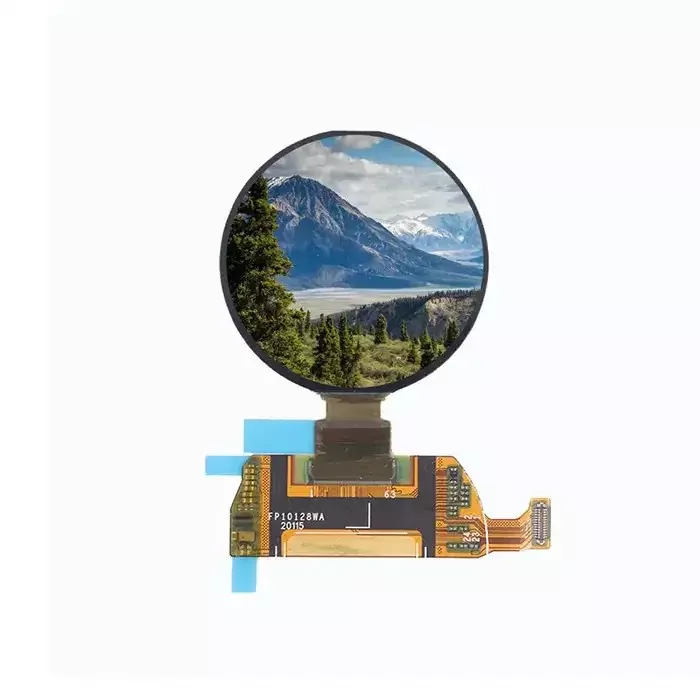
390 × 390 color interface for compact round products where contrast, appearance and thin integration matter.
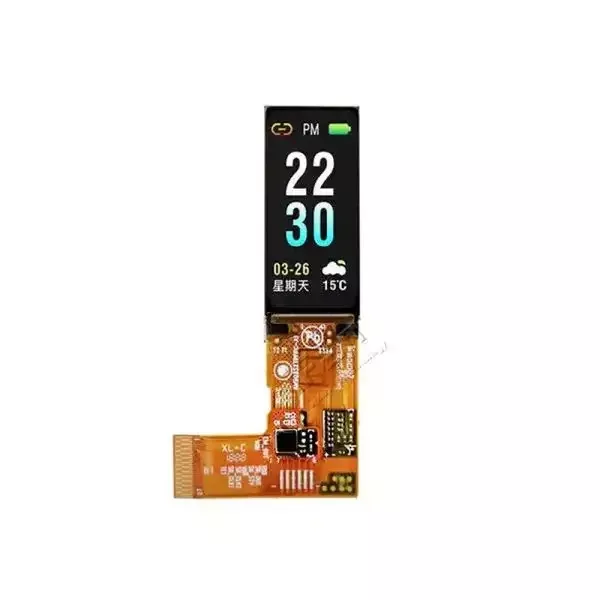
A 126 × 294 elongated AMOLED format for activity data, notifications and compact smart-band interfaces.
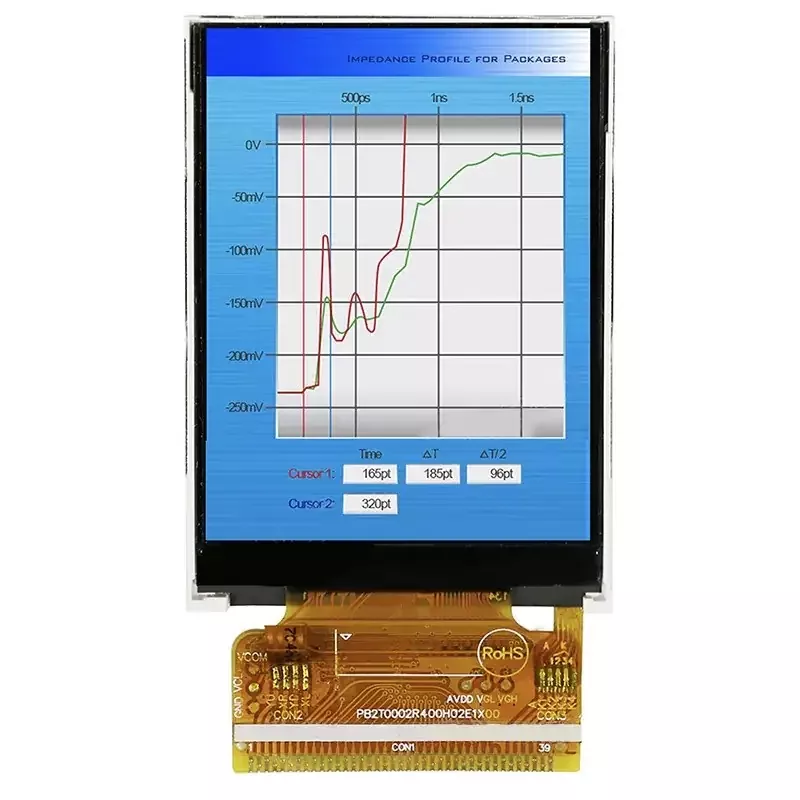
A compact 240 × 320 color TFT with FPC connection for bike computers, handheld fitness products and portable interfaces.
We focus the engineering discussion on the parts that directly affect enclosure fit, power and everyday usability.
Tail direction, length, bend area, pin assignment and connector position are adjusted around the PCB and housing.
On-cell or external capacitive touch is evaluated according to thickness, active area and interface requirements.
AF treatment, strengthened glass, decorative printing and 2.5D edge options support frequent handling and product appearance.
Full lamination can reduce internal reflection, improve contrast and strengthen the assembled front structure.
We configure display technology, backlight brightness, interface and touch power modes to reduce display-module power consumption within the device’s available power budget.
Panel availability, driver IC status and approved alternatives are considered before the design is released.
Share the size, shape, resolution, interface, target battery life, touch and mechanical limits.