

How to Choose the Right Standard TFT Module for Your Industrial Application
For over two decades in this industry, I’ve sat across the table from countless engineers and project managers facing a common, critical challenge. They need a display that won’t just work but will endure—through temperature swings, continuous operation, and the unforgiving environments of industrial settings. The heart of this solution often lies in selecting the perfect Standard TFT Module. This isn't about picking a consumer screen; it's about integrating a robust, reliable visual interface that becomes the dependable face of your machine. At Victronix, we’ve dedicated years to refining this very component, understanding that the right choice is foundational to your application's success and longevity.

What Are the Core Industrial Demands Your Standard TFT Module Must Meet?
The first step is moving beyond general specifications and aligning the module's capabilities with your environment's harsh realities. An industrial Standard TFT Module must be a paragon of resilience.
-
Operational Longevity: It must support 24/7 operation without image retention or premature backlight failure.
-
Environmental Toughness: It should confidently handle extended temperature ranges, high humidity, and potential exposure to dust or contaminants.
-
Electrical & Mechanical Robustness: It needs stable performance against power fluctuations, vibration, and shock.
-
Brightness & Readability: It must be clearly visible under high ambient light, from factory floor lighting to direct sunlight.
-
Long-Term Supply: The design lifecycle must match industrial equipment timelines, avoiding costly redesigns due to component obsolescence.
Which Critical Parameters Dictate Standard TFT Module Performance?
Navigating datasheets requires a focus on key parameters. Here is a breakdown of the non-negotiable specs you must scrutinize.
Table 1: Core Performance Parameters for Industrial Standard TFT Modules
| Parameter | Why It Matters | Industrial-Grade Benchmark |
|---|---|---|
| Operating Temperature Range | Ensures functionality in non-climate-controlled environments. | -30°C to +80°C or wider. |
| Storage Temperature Range | Guarantees survivability during shipping or downtime. | -40°C to +85°C. |
| Luminance (Brightness) | Defines readability in brightly lit conditions. | Minimum 500 nits; 1000+ nits for sunlight readability. |
| Backlight Lifetime | Predicts maintenance cycles and long-term reliability. | 50,000 hours minimum (often at 50% brightness). |
| Interface Support | Determines compatibility with your main controller (MCU, MPU, FPGA). | LVDS, MIPI DSI, RGB, CPU interfaces. |
| Ingress Protection (IP) | Rates resistance to dust and liquid ingress. | Front bezel rated to IP65 for panel-mounted units. |
| Viewing Angle | Allows clear viewing from various positions. | 80/80/80/80 (Left/Right/Up/Down) or better. |
How Does Your Application Environment Guide the Standard TFT Module Selection?
The "where" is as important as the "what." A module perfect for a medical cart will fail on a forklift. Let's match the module to the setting.
-
Factory Automation & HMI Panels: Prioritize high brightness, robust touch solutions (like projective capacitive), and wide temperature ranges. Standard TFT Module longevity is key here to match the machine's lifespan.
-
Transportation & Vehicle Terminals: Vibration resistance, ultra-wide temperature performance, and sunlight-readable brightness are paramount. High-reliability connectors are a must.
-
Outdoor Kiosks & Digital Signage: Focus on anti-glare treatments, high-brightness displays, and thermal management for direct sun exposure.
-
Medical Devices: Demand cleanroom manufacturing, clinical-grade color accuracy, and reliable touchscreens compatible with gloves.
What About Integration and Supply Chain Considerations?
A perfect module on paper is useless if you can't integrate it smoothly or source it for the next decade. This is where partnering with an expert manufacturer like Victronix proves invaluable.
-
Customization Flexibility: Can the standard offering be tailored? At Victronix, we offer modifications to standard TFT modules, including custom connectors, firmwares, or bonding of cover glass, providing a semi-custom solution without the full NRE cost.
-
Technical Support: You need access to engineering support for interface tuning, driver development, and troubleshooting, not just a sales contact.
-
Lifecycle Commitment: Industrial projects last years. Ensure your supplier guarantees long-term availability of the Standard TFT Module you select.
Table 2: Victronix Standard TFT Module Comparison Snapshot
| Model Series | Best For | Key Strength | Brightness | Interface | Special Feature |
|---|---|---|---|---|---|
| VX-IndustroLine | Heavy-duty HMI, Factory Floor | Extreme Durability & Wide Temp | 800 nits | LVDS, RGB | Metal frame, IP65 front seal |
| VX-SunRead Series | Outdoor, Transportation | Sunlight Readability | 1500 nits | MIPI, LVDS | Optical Bonding, Anti-Reflective |
| VX-CoreReliable | Medical, Critical Systems | Long-Term Supply & Stability | 450 nits | CPU, RGB | 10+ Year Guaranteed Supply |
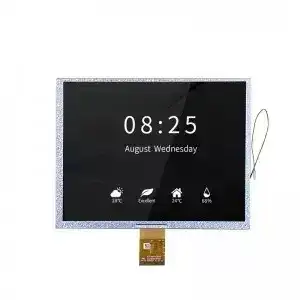
Your Standard TFT Module FAQ Answered
Based on thousands of client conversations, here are the most pressing questions.
FAQ 1: We face extreme temperature swings in our application. How do we ensure a Standard TFT Module will perform reliably?
Look for a module specifically graded for an extended operating temperature range. The critical factor is not just the LCD but the entire assembly—the backlight, bonding materials, and connectors. At Victronix, our modules undergo rigorous thermal cycling and validation testing to ensure performance from frigid cold start-up to high-temperature operation without fading or lag.
FAQ 2: Our product lifecycle is 7+ years. How can we mitigate the risk of the Standard TFT Module being discontinued?
This is a paramount concern. The solution is to partner with a supplier who understands industrial cycles. Victronix manages this through forward-looking component sourcing and offers formal Long-Term Supply Agreements for our core Standard TFT Module families. We also design with longevity in mind, avoiding consumer-grade ICs that have short market lives.
FAQ 3: We need a specific size or feature not in your standard catalog. Do we have to go fully custom?
Not necessarily. Many needs can be met through intelligent modifications to an existing Standard TFT Module platform. A common example is integrating a resistive or capacitive touch panel with a custom connector or firmware. Another is adding optical bonding to a standard module for enhanced readability. This "semi-custom" approach at Victronix provides a tailored solution with significantly lower cost and faster timeline than a ground-up design.
Where Do You Start Your Selection Journey?
The path to the right Standard TFT Module begins with a clear assessment of your non-negotiable requirements versus your desirable preferences. Compromise on the environmentals, and you risk field failures. Over-spec on brightness, and you may impact power budgets and cost unnecessarily.
My two decades of experience have taught me that the most successful projects come from early collaboration. Don't treat the display as a last-minute commodity purchase. Involve your display partner during the conceptual phase. Bring them your challenges: the shock profile, the glare problem, the space constraint. A true partner like Victronix will leverage deep expertise across our Standard TFT Module portfolio to guide you to an optimized, reliable solution.
We understand that your display is the primary point of interaction with your technology. Getting it right is everything. If you're evaluating a new project or wrestling with a display reliability issue, let's connect. Contact us today to discuss your specific application requirements with our engineering team. We're here to help you see the difference quality and expertise can make.