
- English
- Español
- Português
- русский
- Français
- 日本語
- Deutsch
- tiếng Việt
- Italiano
- Nederlands
- ภาษาไทย
- Polski
- 한국어
- Svenska
- magyar
- Malay
- বাংলা ভাষার
- Dansk
- Suomi
- हिन्दी
- Pilipino
- Türkçe
- Gaeilge
- العربية
- Indonesia
- Norsk
- تمل
- český
- ελληνικά
- український
- Javanese
- فارسی
- தமிழ்
- తెలుగు
- नेपाली
- Burmese
- български
- ລາວ
- Latine
- Қазақша
- Euskal
- Azərbaycan
- Slovenský jazyk
- Македонски
- Lietuvos
- Eesti Keel
- Română
- Slovenski
- मराठी
- Srpski језик

Why Is Passive LCD Module Still the Smart Choice for Practical Display Projects?
Article Summary
Choosing the right display is rarely just about brightness or resolution. Many buyers are balancing operating cost, sunlight readability, product lifetime, power limits, mechanical space, and the need for a dependable supply partner. In many of these situations, a Passive LCD Module remains one of the most effective solutions. It offers stable visual performance, simple structure, flexible customization, and a cost profile that makes sense for industrial devices, medical instruments, home appliances, smart controllers, and automotive-related applications.
This article explains where customers usually struggle when selecting a display, why passive LCD technology still solves those problems well, and how VICTRONIX DISPLAY CO., LTD can support projects that need either a standard module or a custom design. You will also find a clear outline, linked contents, comparison tables, practical buying guidance, and a detailed FAQ section.
Table of Contents
- Article Outline
- What Problems Do Buyers Usually Face?
- What Makes a Passive LCD Module Valuable?
- Where Does It Fit Best?
- How Does It Compare With Other Display Options?
- How Should You Choose the Right Module?
- Why Does the Supplier Matter So Much?
- Frequently Asked Questions
- Ready to Move Your Project Forward?
Article Outline
- Understanding the real-world purchasing pressure behind display selection
- Breaking down the practical strengths of a Passive LCD Module
- Reviewing the most suitable use cases across different industries
- Comparing passive LCD modules with more power-hungry or costlier alternatives
- Creating a simple checklist for engineers, sourcing teams, and product managers
- Explaining how a capable manufacturer helps reduce risk from sampling to mass production
- Answering common questions customers ask before sending an inquiry
What Problems Do Buyers Usually Face?
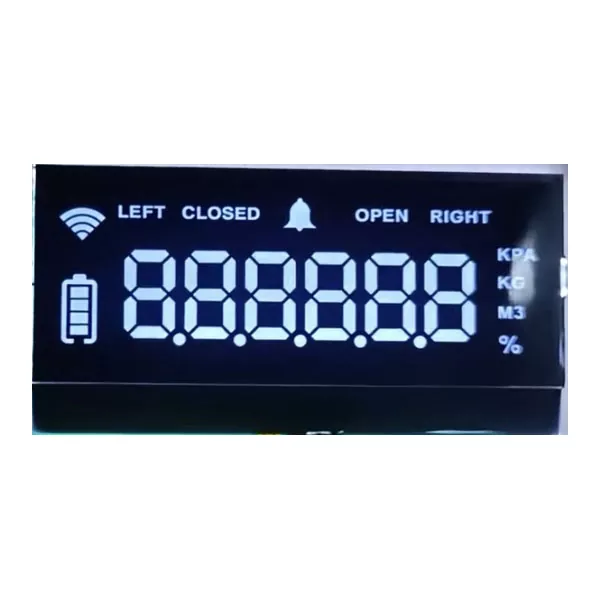
Display selection looks simple until a project enters real development. At that point, customers often discover that the display influences far more than appearance. It can affect battery life, enclosure size, viewing comfort, interface design, long-term maintenance, production cost, and even delivery schedules. A wrong choice may look acceptable in a lab test but become expensive and unreliable in actual field conditions.
One of the biggest customer pain points is mismatch. A team may choose a display based on attractive visuals, only to find that the power draw is too high, the readability is poor under ambient light, or the price does not fit the product’s target market. In other cases, a standard module may not match the mechanical layout, backlight requirement, segment design, viewing angle, or connector position of the final device. That leads to redesigns, delays, and unnecessary cost.
Another pain point is stability. Buyers want a display that performs consistently over time, especially in products used every day. Industrial controllers, household appliances, smart meters, instruments, medical support devices, and automotive-related products all need dependable readability rather than unnecessary visual complexity. For these projects, the practical question is not “What looks the most advanced?” but “What keeps working clearly, efficiently, and predictably?”
This is exactly where a Passive LCD Module often makes sense. It addresses many of these common frustrations by focusing on clarity, efficiency, structure simplicity, and customization that serves a real application instead of adding cost without purpose.
What Do Customers Usually Want Most?
- Low power consumption for portable or always-on devices
- Good readability in practical lighting conditions
- Reasonable cost for volume production
- Stable quality across batches
- Flexible customization for shape, segment pattern, interface, and backlight
- Reliable support from sample approval to mass production
What Makes a Passive LCD Module Valuable?
A Passive LCD Module is often chosen because it solves problems efficiently. It does not try to be everything. Instead, it focuses on what many products truly need: clear visual indication, dependable operation, and controlled cost. For products that display numbers, icons, symbols, status indicators, or essential interface content, passive LCD technology remains highly relevant.
First, power consumption is one of its strongest advantages. In products where power efficiency matters, this can directly improve usability and operating time. Second, passive LCD modules are well suited to applications where long service life and consistent behavior matter more than flashy graphics. Third, they are highly adaptable. Customers can choose segment designs, viewing angles, display modes, polarizer options, and backlight combinations according to the intended use environment.
Just as important, passive LCD technology supports disciplined product design. It helps teams define what information is truly necessary on the screen and present it clearly. That often leads to simpler interfaces and stronger product reliability. Instead of overengineering the display, manufacturers can match the module to the exact communication needs of the device.
| Customer Need | How a Passive LCD Module Helps |
|---|---|
| Need to reduce power usage | Supports efficient display operation for battery-powered and low-energy systems |
| Need a more affordable display solution | Offers a practical cost structure for many industrial and consumer products |
| Need custom segments or symbols | Allows tailored layouts for icons, digits, indicators, and application-specific markings |
| Need stable readability | Can be designed around viewing angle, display mode, and backlight needs |
| Need dependable volume supply | Works well when paired with an experienced manufacturing partner |
Where Does It Fit Best?
Not every product needs a complex color display. In fact, many successful products perform better with a cleaner and more focused interface. A Passive LCD Module is especially useful in devices where information needs to be instantly understood and where reliability matters every single day.
In industrial equipment, operators often need numeric values, warning symbols, timing information, or machine status at a glance. In smart home and building controls, users benefit from clear icons and simple temperature, mode, or timer displays. In medical and healthcare devices, readability and consistency are more important than decorative effects. In automotive-related systems, robust performance and controlled design parameters matter greatly. Even in appliances and office equipment, passive LCD modules remain a practical fit because they present core information without unnecessary power and cost burden.
This versatility is one reason experienced display manufacturers continue to develop passive LCD solutions. A module can be designed to align with the product’s actual working environment, whether the priority is vertical viewing, transmissive performance, transflective behavior, segment visibility, or white and blue backlight integration.
- Industrial control panels and measuring instruments
- Smart home controllers and building systems
- Medical and healthcare devices
- Automotive support displays and in-vehicle indicators
- Office equipment and white goods
- Portable devices that benefit from lower power demand
How Does It Compare With Other Display Options?
Buyers are often deciding between a passive LCD solution and a more visually advanced alternative. That comparison should be based on application logic, not trend pressure. A high-end display may look impressive, but if the product only needs stable digits, icons, and status information, it may add unnecessary expense and complexity. On the other hand, a passive LCD module can deliver the right function with less overhead.
| Factor | Passive LCD Module | More Complex Graphic Display Options |
|---|---|---|
| Power demand | Usually lower and easier to manage in practical devices | Often higher, especially in richer visual interfaces |
| Information style | Excellent for digits, icons, indicators, and focused content | Better for rich graphics and multimedia-style presentation |
| Cost control | Often more suitable for cost-sensitive or volume projects | May increase total product cost significantly |
| Design complexity | Can be simpler and more application-specific | Usually requires broader system resources and interface planning |
| Long-term practicality | Very strong in products that need stable, repetitive, readable output | Useful when advanced graphics are truly necessary |
The point is not that one technology replaces all others. The point is fit. If your product needs a robust, efficient, and clearly defined display solution, a Passive LCD Module is often the more disciplined choice.
How Should You Choose the Right Module?
A good display decision starts with asking the right questions. Too many projects begin with size or price alone, but those are only part of the picture. A better approach is to define the actual use environment and user interaction first. Once that is clear, the display specification becomes much easier to shape.
Start by identifying what must be shown on the screen. Is it only digits and symbols, or a broader matrix layout? Then consider the viewing direction, expected lighting condition, required backlight behavior, and installation constraints. You should also review electrical interface compatibility, environmental expectations, and quantity planning. A strong supplier can guide this process and translate application goals into a module design that is practical to manufacture.
What Should Be Confirmed Before Ordering?
- Display content type such as segment, icons, status, or dot matrix information
- Viewing angle requirement based on how the end user sees the product
- Display mode preference such as positive, negative, transmissive, or transflective
- Backlight color and brightness expectation
- Operating environment and reliability expectations
- Mechanical size, interface layout, and mounting limits
- Sample validation and production timeline
This is where working with a capable manufacturer becomes especially important. A display is not just a component on a list. It is an operating interface, a user touchpoint, and a long-term quality signal. It deserves careful matching.
Why Does the Supplier Matter So Much?
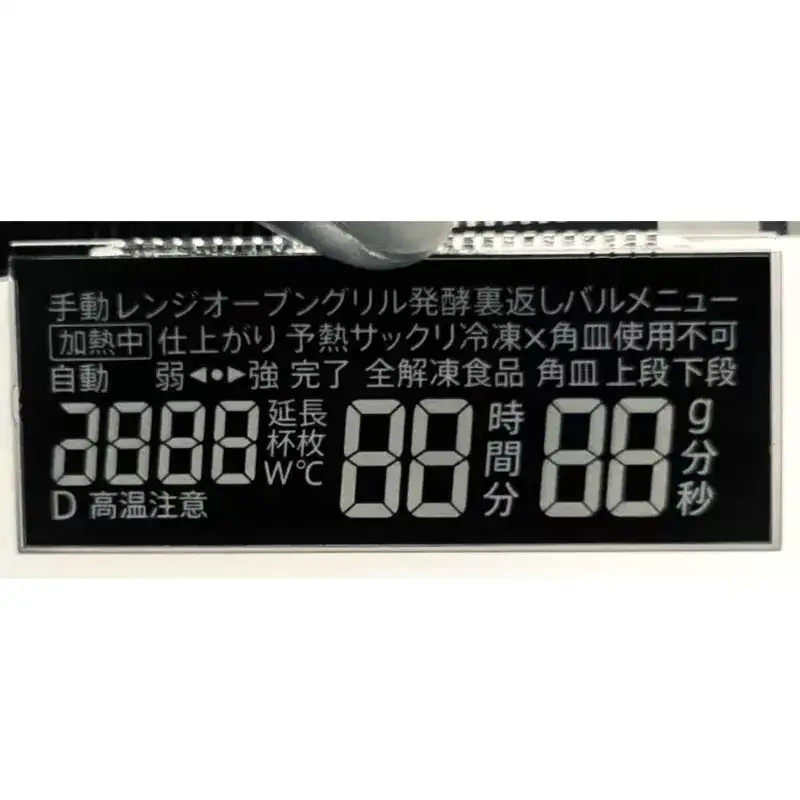
Even a well-designed module can become a problem if the supplier lacks process control, communication speed, or customization experience. Buyers do not only need a catalog. They need a partner who understands application requirements, responds clearly, and can support both standard and custom solutions without creating confusion during development.
VICTRONIX DISPLAY CO., LTD is positioned to support this kind of demand. For customers sourcing a Passive LCD Module, the value is not just in the product itself but in the combination of manufacturing experience, customization capability, quality focus, and practical project support. That matters when teams are trying to shorten development cycles, avoid repeated changes, and move from sampling into stable supply.
A dependable supplier helps reduce uncertainty in several ways. It can advise on suitable display structure, clarify trade-offs early, support customized design needs, and keep the project aligned with cost and delivery goals. That is the kind of support buyers want when the display is a critical part of the finished product experience.
| Supplier Capability | Why It Matters to the Customer |
|---|---|
| Customization support | Helps the display fit the product instead of forcing the product to fit the display |
| Quality management | Improves batch consistency and reduces field risk |
| Responsive communication | Speeds up decisions during development and sourcing |
| Production capability | Supports smoother transition from prototype to quantity orders |
| Application understanding | Leads to better recommendations for real working conditions |
Frequently Asked Questions
1. Is a Passive LCD Module still a good option for new product development?
Yes. It remains a strong option when the product needs clear, focused information display, controlled power use, and a practical cost structure. For many instruments, appliances, controllers, and embedded devices, it is still an excellent fit.
2. Can a Passive LCD Module be customized for my product?
Yes. Customization can include segment pattern, viewing angle, display mode, backlight choice, dimensions, and other structural elements depending on the application.
3. Is it suitable for industrial use?
In many cases, absolutely. Industrial products often benefit from clear symbols, numbers, and status indicators rather than visually complex graphics, which makes passive LCD technology highly practical.
4. What if my device will be used in different lighting conditions?
That should be considered early in the design stage. A suitable combination of display mode, polarizer, viewing direction, and backlight can improve readability for the intended environment.
5. How do I know whether I need a standard model or a custom one?
If your product can use an existing size, layout, and display function, a standard model may work. If the interface, shape, symbols, or mechanical structure are unique, a custom module is often the better long-term solution.
6. Why do many buyers still prefer passive LCD solutions over more advanced displays?
Because practical products are built around function, not just appearance. When reliability, cost control, low power use, and simple readability matter, a Passive LCD Module often delivers better business value.
Ready to Move Your Project Forward?
If your team is looking for a display solution that balances readability, customization, stability, and sensible cost, a Passive LCD Module deserves serious consideration. The right module can simplify your design, support your product’s performance goals, and make mass production more predictable.
VICTRONIX DISPLAY CO., LTD works with customers who need practical display support for real products, not vague promises. Whether you are developing a new device, upgrading an existing interface, or comparing display paths before final selection, this is the right time to move the conversation forward.
Tell us what your product needs, what your interface must show, and what challenges you are trying to solve. We can help you evaluate the right Passive LCD Module approach for your application and support you with a more suitable solution. Contact us today to discuss your project, request technical support, or start your inquiry with confidence.