
Home
>
Products > TFT LCD Module > High Brightness TFT Module > 3.5" 320x240 Anti-Glare TFT LCD Module Wide Temperature - VXT350HQS-01X-W
Products
3.5" 320x240 Anti-Glare TFT LCD Module Wide Temperature - VXT350HQS-01X-W
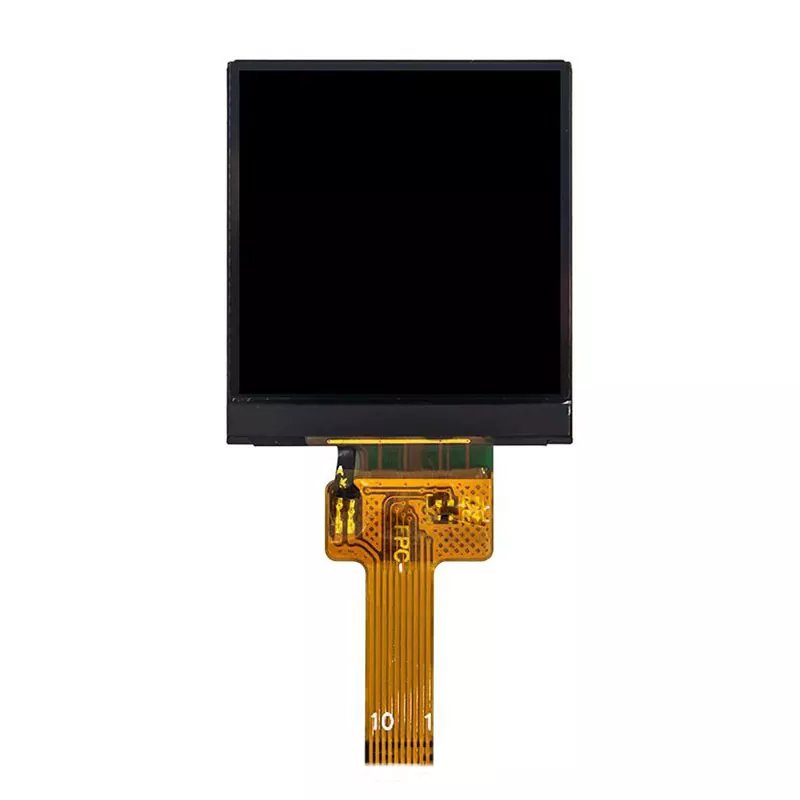
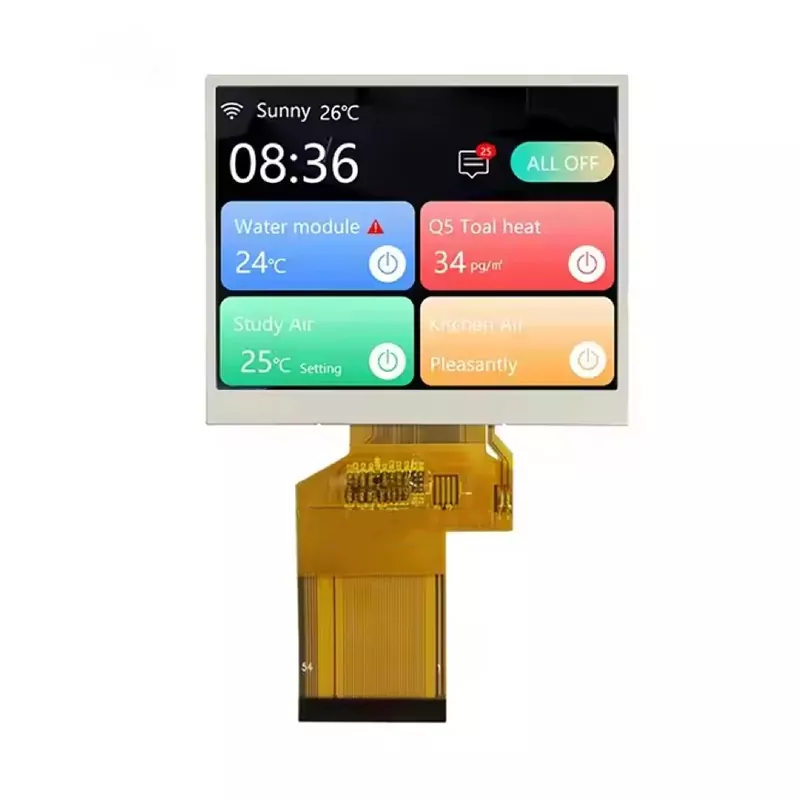
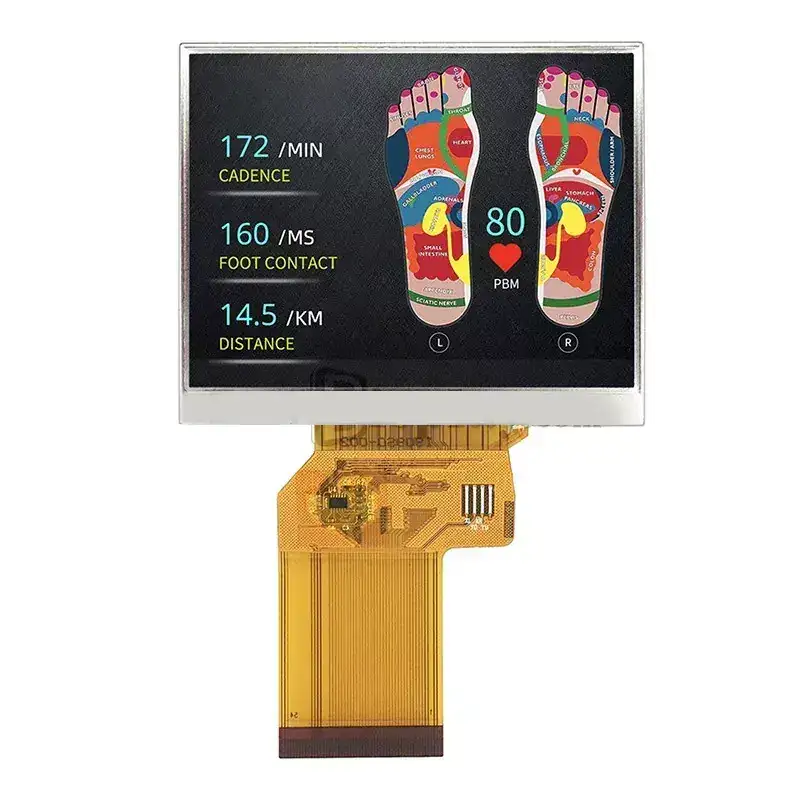
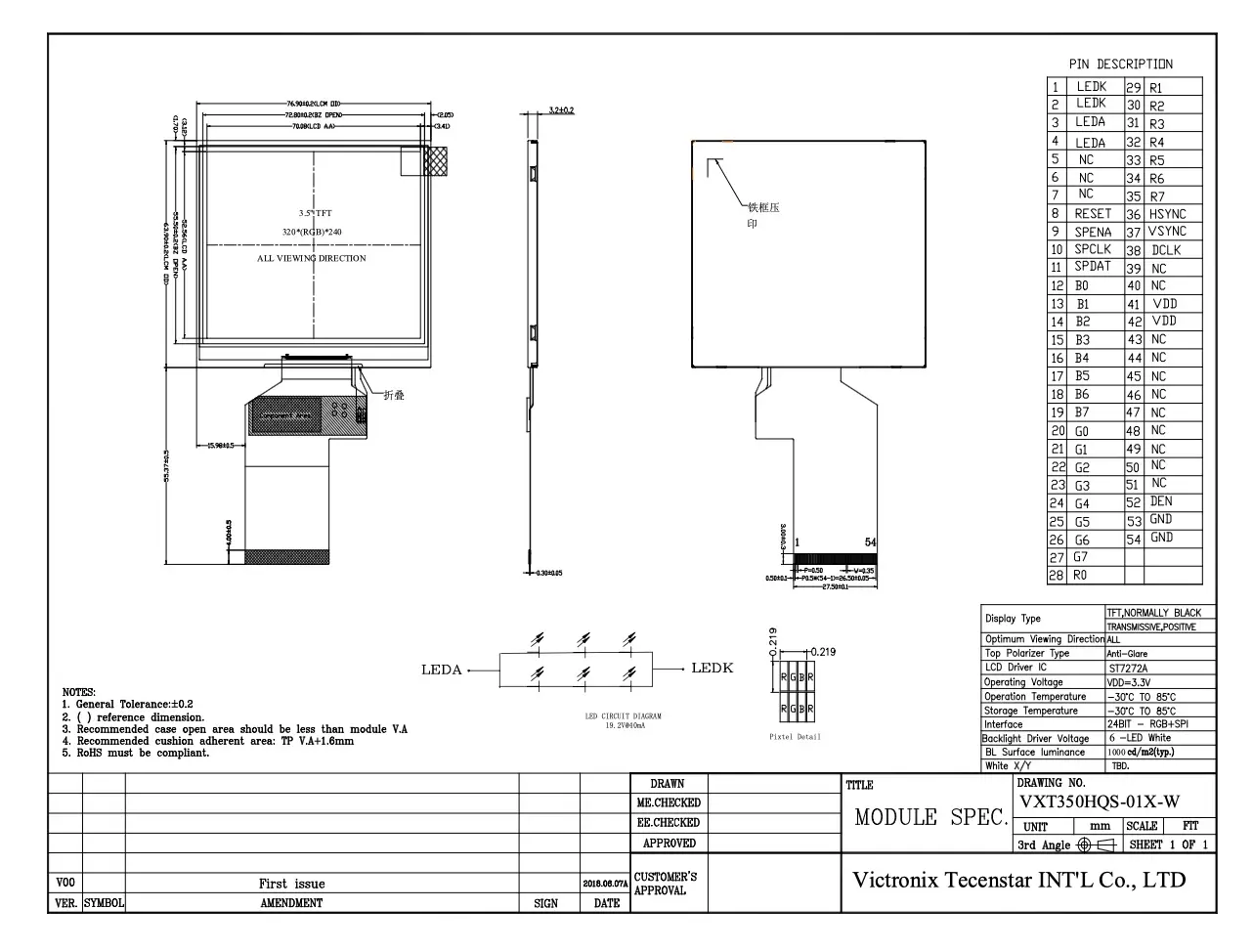
The VXT350HQS-01X-W is a 3.5-inch TFT LCD module with 320x240 QVGA resolution and an anti-glare top polarizer — the only module in our range that specifies one. Combined with all-direction viewing and no grayscale inversion, it stays readable wherever the operator stands and wherever the light comes from, without spending brightness or backlight life on the problem. Rated -30 to +85°C, with 24-bit RGB for video and a separate SPI channel for configuration.
Model:VXT350HQS-01X-W(wide temperature high brightness)
Send Inquiry
Product Description
The Anti-Glare Polarizer: Reflections Removed, Not Outshouted
Most display modules leave the factory with a glossy top polarizer. Under a bright light that surface behaves like a mirror, and what the operator sees is not the screen but the ceiling lamp, the window behind them, or their own reflection. The usual reflex is to specify more brightness.
That works, but it is the expensive way round the problem.
|
Approach |
What it does |
What it costs |
Where it fails |
|
Anti-glare polarizer (this module) |
Breaks specular reflection into diffuse scatter |
Nothing — no power, no heat, no life penalty |
Adds a very slight haze at close range |
|
Increase brightness |
Outshines the reflection |
More current, more heat, shorter backlight life |
Direct sun — unwinnable |
|
Add an external AR film |
Reduces reflection |
Extra part, extra lamination step, extra cost |
Film can delaminate over time |
|
Mechanical hood or shade |
Blocks the light source |
Enclosure depth, tooling, weight |
Only works from fixed angles |
The anti-glare treatment is built into the polarizer itself, so there is no additional part, no lamination step and nothing to delaminate. It does not consume power, so it does not add heat to a sealed enclosure, and it does not shorten the backlight. It simply stops the front surface from behaving like a mirror.
The honest trade is that a matte surface adds a very slight haze, which costs a little perceived sharpness when you hold the display very close. For a 3.5-inch panel read at arm's length on a bench, in a vehicle, or on a machine, that is a good trade. If your product is a close-viewing optical instrument, ask us about the glossy version instead.
Two more ratings that make it work
|
Rating on this datasheet |
Value |
What it means in use |
|
Recommended viewing direction |
All o'clock | |
|
Grayscale inversion direction |
None (–) |
Tones do not reverse at oblique angles, as they do on many TN panels |
|
Top polarizer type |
Anti-glare |
Reflections scattered rather than mirrored |
Those three together are what "readable from anywhere" actually consists of. Any one of them alone is a specification; all three together mean the operator does not have to move.
Rated -30°C to +85°C
Operating range is -30°C to +85°C, among the widest in our range and ten degrees better than a typical -20 to +70°C panel at both ends. In practice the rating removes hardware rather than just surviving conditions:
- No fan or vent for a sealed enclosure that gets hot in summer.
- No heater for equipment shipped to cold climates.
- One part for all markets rather than a temperate and a cold-climate variant.
- Fewer things to fail later — a fan and a heater are two more components with bearings, filters and contacts.
Drawing
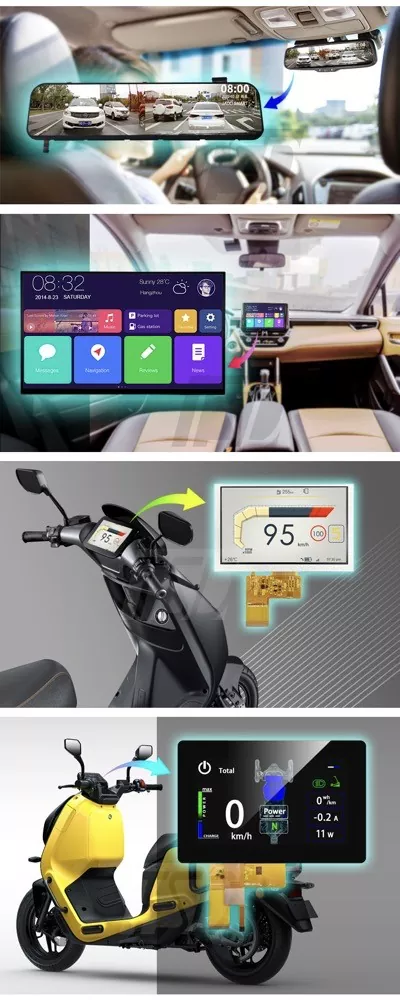
Application
Hot Tags: 3.5 inch TFT LCD, 3.5 inch TFT display module, 320x240 TFT LCD, QVGA TFT LCD module, anti glare TFT display, 3.5 inch TFT wide temperature, 24 bit RGB TFT module, 3.5 inch TFT for industrial panel, 3.5 inch TFT without touch screen, Victronix TFT LCD module
Product Tag
3.5 inch TFT LCD module
3.5 inch 320x240 TFT display
QVGA TFT LCD module 3.5 inch
anti glare TFT display module
3.5 inch TFT wide temperature range
24 bit RGB TFT LCD module
3.5 inch TFT for industrial panel
3.5 inch TFT without touch screen
3.5 inch display for instrumentation
320x240 TFT module for embedded project
Related Category
High Brightness TFT Module
Standard TFT LCD Module
Bar-Type TFT Module
Round TFT LCD Module
Transflective TFT LCD Module
Wide-Temperature TFT Module
Square TFT LCD Modules
Send Inquiry
Please feel free to give your inquiry in the form below. We will reply you in 24 hours.